Manage Dental Anxiety Before Appointments
Table of Contents
- Understanding Your Dental Anxiety
- How to Calm Your Nerves Before a Dentist Appointment
- What to Tell Your Dentist About Dental Anxiety
- Breathing Exercises for Dental Anxiety
- How to Prepare for a Dentist Appointment When Anxious
- Additional Options for Dental Anxiety
- Managing Anxiety When It Becomes Panic
- Building Trust With Your Dentist
- Frequently Asked Questions
Last Updated: October 5, 2026
Understanding Your Dental Anxiety
Dental anxiety is real, and you're not alone. Many people feel nervous before a dentist appointment, some worry about pain, others fear losing control or feel embarrassed.
The good news: you can manage dental anxiety before appointments. Preparing your mind and body ahead of time helps you walk in calmer and more ready.
This guide shares practical strategies you can start today.
How to Calm Your Nerves Before a Dentist Appointment
Calming your nerves can start days before your appointment. Giving yourself time to prepare may help you feel more comfortable and in control
Start Preparation Days Ahead
Give yourself some time to prepare mentally. A little planning ahead can help you feel more comfortable and in control.
What to do:
- Write down your specific fears, pain, needles, the drill, latex. Naming your fear makes it less powerful.
- If you're having a specific treatment, ask your dental team what to expect. Understanding the steps ahead of time may help reduce uncertainty and make the appointment feel more manageable.
- Call your dental office and tell them about your anxiety. They can explain what to expect and discuss ways to make you more comfortable.
The Night Before Your Visit
The night before matters more than you might think. Your nervous system needs time to settle.
Evening routine:
- If caffeine tends to make you feel jittery or increase your anxiety, consider limiting it before your appointment.
- Eat a light, balanced dinner. Don't skip meals or eat heavy foods.
- Get a good night's sleep if possible. Being well-rested may make it easier to manage stress and anxiety the following day.
The Morning of Your Appointment
The morning sets the tone for your whole day.
Morning steps:
- Eat a light breakfast. Don't arrive hungry or overfed.
- Skip coffee or limit it to one cup before 8 a.m. You want calm energy, not jittery nerves.
- Take a warm shower to relax muscles and calm your nervous system.
- Dress in comfortable clothes. Tight waistbands and scratchy fabrics add stress.
- Leave early so you're not rushed; arriving early lets you settle.
- Listen to calm music or a guided meditation on the drive to keep your mind off fearful thoughts.
What to Tell Your Dentist About Dental Anxiety
Communication is your most powerful tool. Your dentist can't help if they don't know what you need.
Be specific when you call to schedule:
- "I have dental anxiety and want to know how you handle nervous patients."
- "I'd like to discuss ways to stay calm during my visit."
- "I prefer a slower pace and want to know what's happening step by step."
Tell Dr. Arias at your appointment:
- What specifically makes you anxious (needles, sounds, feeling trapped, past bad experiences)
- What has helped you stay calm before
- What you absolutely need to feel safe (a hand signal to pause, headphones, a trusted person nearby)
Dr. Arias listens. When you speak up about your anxiety, he adjusts his approach to match your needs. Whether you're coming in for General Family Dentistry or a more involved procedure, we tailor the experience to your comfort level.
Breathing Exercises for Dental Anxiety
Your breath is the fastest way to calm your nervous system. When you're anxious, breathing gets shallow and fast, keeping your body in fight-or-flight mode. Deep breathing flips the switch to calm. Practice these exercises daily before your appointment so your body learns them automatically.
Box Breathing Technique
Box breathing is simple and works fast, in the waiting room, the car, or the dental chair.
How to do it:
- Breathe in slowly through your nose for a count of 4.
- Hold your breath for a count of 4.
- Exhale slowly through your mouth for a count of 4.
- Hold empty for a count of 4.
- Repeat 5-10 times.
Do this for 2-3 minutes. Your heart rate slows, your shoulders drop, and you feel noticeably calmer.
4-7-8 Breathing Method
A longer, slower exhale can help promote a calmer breathing pattern and may help reduce feelings of anxiety.
Steps:
- Breathe in through your nose for a count of 4.
- Hold for a count of 7.
- Exhale slowly through your mouth for a count of 8.
- Repeat 4 times.
The slower breathing pattern and longer exhale may help your body shift toward a more relaxed state.
Using Breathing During Treatment
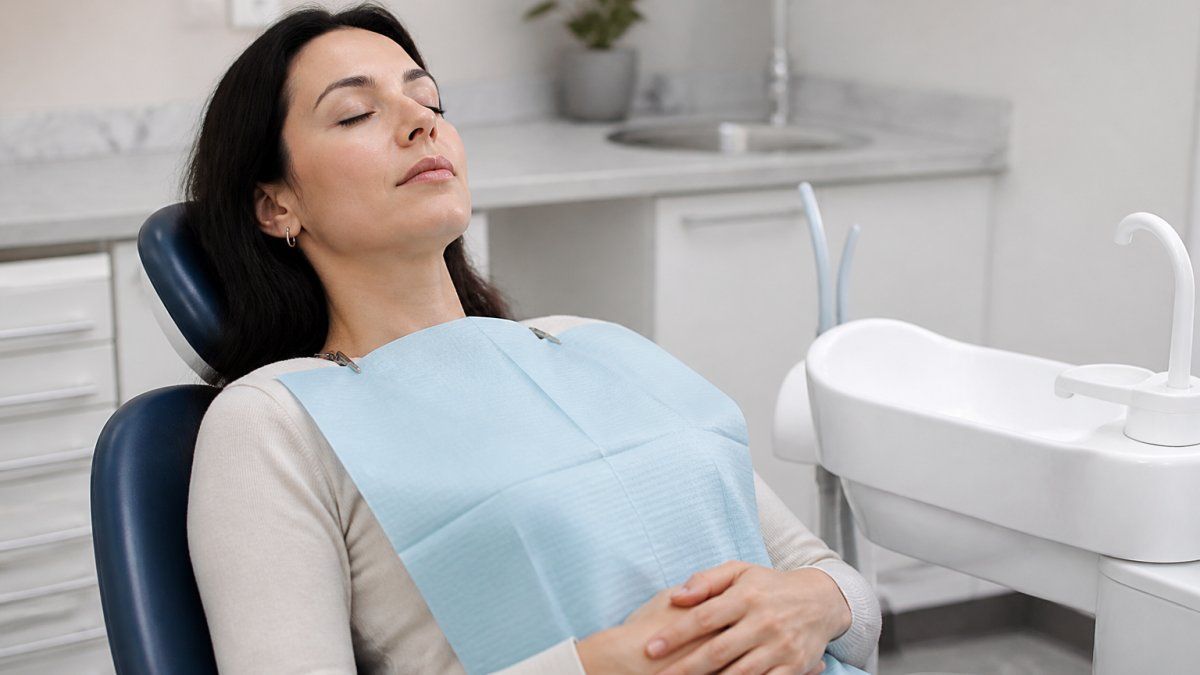
You can keep breathing throughout your appointment. Even when the dentist is working, controlled breathing keeps you grounded.
During treatment:
- Use box breathing if you feel tension building.
- Keep your breathing slow and steady. Don't hold your breath.
- If you need a break, raise your hand. We'll pause so you can reset.
How to Prepare for a Dentist Appointment When Anxious
Most advice on dental anxiety gives you a list of tips and leaves you to figure out when to use them. A timed plan works better, anxiety responds to structure, and knowing what to do at each stage removes the guesswork that feeds worry.
Three Days Before: Set Up the Visit
- Write down your specific fears in plain words, "the drill sound," "the numbing shot," "feeling trapped." Naming a fear turns vague dread into a concrete problem you can plan around.
- Call your dental office and tell them you have dental anxiety. Ask what the appointment involves, roughly how long it takes, and whether you can request a slower pace or a pause signal.
- If you are having a specific treatment, ask us to walk you through the steps in order. Knowing what happens first, second, and third replaces imagination with information.
The Day Before: Lower Your Baseline
- Cut caffeine after early afternoon. It keeps your body alert and jittery, which makes anxious feelings stronger.
- Eat a normal, balanced dinner. Skipping meals or eating heavy food can leave you shaky or queasy the next morning.
- Do a few minutes of the breathing practice described below. Rehearsing when calm makes the technique easier to recall when you're not.
The Morning Of: Arrive Steady
- Eat a light breakfast so you are neither hungry nor overly full.
- Limit coffee to one cup early, or skip it. If caffeine tends to make you feel jittery or increase your anxiety, consider limiting it before your appointment.
- Take a warm shower to relax tight muscles.
- Dress in soft, loose clothing. Tight waistbands and scratchy fabrics add background stress.
- Leave with time to spare. Rushing spikes anxiety; arriving early lets you settle.
- Play calm music or a guided meditation on the drive instead of rehearsing worst cases.
In the Waiting Room: Use the Last Few Minutes
- Put your phone away. Scrolling feeds a restless mind.
- Do one round of slow breathing with a longer exhale than inhale.
- Review what you want to tell the dental team: your triggers, what has helped before, and what you need to feel safe.
Mental Rehearsal That Actually Helps
Visualization works best when it is specific and realistic, not a fantasy where nothing goes wrong. Picture the real sequence: walking in, being greeted, sitting in the chair, hearing the equipment, and using your pause signal once. Rehearsing the pause and recovery teaches your nervous system that a rough moment is survivable and temporary.
Physical Comfort Strategies
Your body and mind affect each other. A tense body keeps the mind on edge.
Before the appointment:
- Do gentle stretching. Loosening tight muscles releases some of the physical side of anxiety.
- Take a warm bath or shower.
- Take a short walk. Light exercise can take the edge off nervous energy.
At the appointment:
- Ask for a blanket if you tend to feel cold. Warmth is calming.
- Ask about a neck pillow or a different chair position if reclining feels uncomfortable.
- Ask whether you can wear headphones during treatment. Distraction helps many people.
These requests are common and reasonable. Letting your dental team know what helps you is part of the plan, not an inconvenience. Individual recommendations depend on an examination by a dentist, and a professional will always explain what they are doing before they begin.
Additional Options for Dental Anxiety
For some patients, additional anxiety-management options may be appropriate. At Jonathan Arias DDS , we discuss your concerns, medical history, and treatment needs to determine which options may be appropriate for you. Nitrous oxide and oxygen may be an option for eligible patients who would benefit from additional relaxation during dental treatment.
Our goal is to help you feel comfortable, informed, and in control throughout your visit.
Managing Anxiety When It Becomes Panic
Anxiety and panic are not the same thing. Anxiety is a rising sense of worry you can usually work with. Panic is a sudden surge: racing heart, shortness of breath, feeling trapped or losing control. Knowing how to tell them apart, and what to do at each stage, matters more than trying to prevent every anxious moment.
Know the Escalation Ladder
Think of distress as a ladder with a few rungs:
- Mild: tight shoulders, shallow breathing, restless thoughts. You can still follow what is happening.
- Moderate: faster heartbeat, sweating, strong urge to get up. You can still speak and use a signal.
- High: pounding heart, difficulty catching your breath, feeling trapped. You need to pause.
Catching yourself one rung lower is easier than waiting until you are at the top. If you notice mild or moderate signs, that is the moment to use a breathing technique or raise your hand.
Agree on a Plan Before Treatment Starts
Before anything begins, tell the dental team:
- Your personal early warning signs, such as sweating, gripping the armrests, or going quiet.
- The signal you will use to pause, and confirm everyone knows it.
- What helps you most in the moment: a break, sitting up, water, dimmer light, or being told what is happening next.
If Panic Starts During the Appointment
- Use your pause signal immediately. Treatment stops.
- Sit up if you are reclined. Lying back can make panic feel worse.
- Breathe with a longer exhale than inhale. Counting the exhale gives your mind a simple task.
- Press your feet into the floor and notice the contact. This grounds you in the present.
- Say what you need: more time, a break, water, or to reschedule. All are reasonable.
A panic response can feel overwhelming while it is happening. For many people, the intensity eventually begins to decrease, especially when they can pause, slow their breathing, and communicate what they need.
After a Panic Episode
- Do not treat it as a failure. Panic is a physical stress response, not a character flaw.
- Tell us what happened and what helped. That information shapes your next visit.
- Write down one or two things that worked so you can reuse them.
A Note on What These Techniques Can and Cannot Do
Breathing, grounding, and pause signals are widely recommended and genuinely helpful for many people, but they are coping tools, not cures. They work best when practiced ahead of time and combined with clear communication. For some patients, additional options such as sedation may be worth discussing. Availability, suitability, and coverage vary, so ask us directly and we will explain what applies to your situation.
Building Trust With Your Dentist
Trust is the foundation of comfortable dental care. You can't relax with someone you don't trust.
How trust builds:
- We listen to your concerns without rushing.
- We explain what we're doing before we do it.
- We answer your questions honestly.
Anxious patients need consistency, honesty, and respect.
When you find a dentist you trust, stick with them.
Managing dental anxiety before appointments is absolutely possible.
If something doesn't feel right, we want you to tell us so we can adjust the appointment when appropriate.
At Jonathan Arias DDS in Ventura, we understand that dental visits can feel stressful or overwhelming. We take time to listen to your concerns, explain what we're doing, and adjust our approach when appropriate to help make your visit more comfortable.
Additional Resources: The American Dental Association offers additional information about managing anxiety and stress during dental visits.
Frequently Asked Questions
What should I tell my dentist if I have dental anxiety?
Be honest and specific about your fears. Tell your dentist what triggers your anxiety—whether it's the sound of instruments, the feeling of pressure, or past negative experiences. Mention if you need frequent breaks or prefer a hand signal to pause treatment. This information helps your dentist adjust their approach and gives you a sense of control. Dr. Arias and the team at our Ventura practice listen carefully to patient concerns and work together to create a comfortable experience.
Can breathing exercises help with dental anxiety before an appointment?
Yes. Breathing exercises activate your body's relaxation response and lower your heart rate and blood pressure. Box breathing and the 4-7-8 method are effective techniques you can practice days before your appointment and use during treatment itself. Even a few minutes of slow, intentional breathing in the waiting room can reduce physical anxiety symptoms and help you feel more in control.
How can I prepare for a dental appointment if I am afraid?
Start preparation several days ahead. Learn what to expect during your visit, avoid caffeine the morning of your appointment, and practice relaxation techniques like visualization. Schedule morning appointments when stress is typically lower, and arrive early to acclimate to the environment. Let your dentist know your anxiety level at the start so they can adjust their pace and communication.
What can I do if my anxiety becomes panic during treatment?
Establish a hand signal with your dentist before treatment begins—raising your hand means pause immediately. Use this signal without hesitation if you feel overwhelmed. Your dentist can also adjust their approach, provide breaks, or discuss sedation options if anxiety is severe and persistent.
Does nitrous oxide help with dental anxiety?
Nitrous oxide combined with oxygen can help reduce anxiety and improve comfort for some dental patients. Whether it is appropriate depends on your health history, treatment needs, and individual circumstances. At Jonathan Arias DDS, we review your situation and determine whether nitrous oxide may be an appropriate option for you.